Living with a painted piece
Care & planting
These are concrete, sealed, and meant to be used. Two things matter: keep the water controlled, and keep the painted surface dry when you are cleaning it. Everything below is really just those two ideas.
Planting into them
The pieces have no drainage hole, and that is deliberate — a hole in a hand-pressed concrete wall is where it eventually cracks, and it would also mean water sitting on your furniture. There are two good ways to plant, and one to avoid.
Best — keep the nursery pot inside
Drop the plant in still in its plastic pot, with a little sphagnum or bark tucked around the top so you cannot see it. Lift it out to water at the sink, let it drain properly, put it back. The concrete never gets wet inside and the plant never sits in water.
Also good — plant directly, with a gravel layer
Two centimetres of pumice or fine gravel in the bottom, then potting mix. Water in small amounts — about a quarter cup for the pot, half a cup for the bowl — and let the plant tell you when it wants more. Suits succulents, string of pearls, and anything that prefers to dry out.
Avoid — filling it and watering as usual
With no hole, a generous watering has nowhere to go. The mix stays sodden, roots rot, and over months the damp can push a bloom of salts through to the outside. If you have overwatered once, tip it out, let everything dry, and start again — no harm done.
Watering
- Small and often beats deep and occasional. A quarter cup at a time for the pot.
- Feel the mix with a finger before you water. If it is cool and damp, wait.
- If you can, water at the sink with the nursery pot out, then let it drain fully.
- Never leave standing water in the bowl — tip it out rather than let it sit.
Keeping the paint good
- Wipe with a barely damp cloth, then dry it. That is the whole cleaning routine.
- No soaking, no dishwasher, no scouring pads, no bleach or spray cleaner — the painting sits on the surface under a matte sealer, not glazed into it.
- Fingerprints and dust are fine and expected; the sealer means handling will not lift the paint.
- Keep it out of long direct sun. Concentrated afternoon sun through glass will slowly lighten greens, as it does with any pigment.
Where it lives
- Indoors, or a covered porch or balcony that never gets rained on.
- Not for frost, not for the garden, not for outdoors in a Wellington winter.
- It is heavy for its size on purpose, so a windowsill or open shelf is fine.
- On timber, use a felt pad or a coaster — concrete is harder than most tabletops.
What suits them
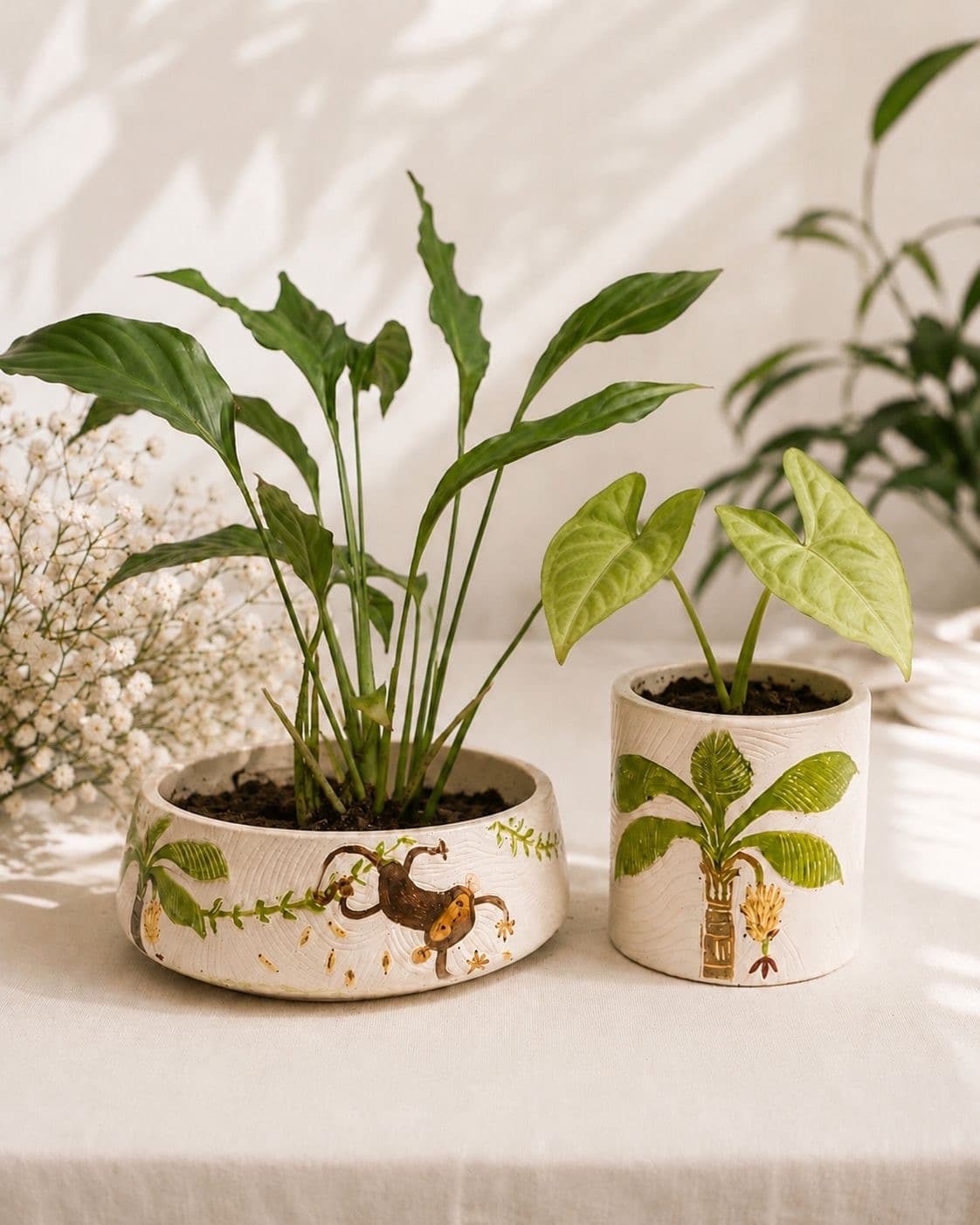
The bowl is wide and shallow; the pot is narrow and deeper. That decides most of it.
In the bowl
Calathea, peace lily, begonia rex, ferns, or a low arrangement of two or three small plants. Shallow, wide root systems.
In the pot
Syngonium, pothos, a small monstera, string of hearts trailing over the rim. Anything happy in a 10 cm nursery pot.
If you forget to water
Succulents, haworthia, zz plant, snake plant — the plants that prefer the dry side suit an unholed pot best of all.
Not ideal
Thirsty herbs like basil and mint, or anything that wants a deep soak twice a week. They will do better in a pot with a hole.
If something goes wrong
A chip, a scuff, or paint you have accidentally scrubbed
Send Ru a photograph. Small chips in the concrete she can usually talk you through filling; a scuffed animal she can often repaint if you post the piece back, and she charges only the return postage. It is a painted object made by a person — it can be mended by one.